The 2026 Guide to FDA-Approved Coatings for Custom Food Boxes


Learn which FDA-approved coatings work best for your custom food boxes, including PFAS-free options.
Brothersbox provides one-stop luxury food packaging box solutions.
Learn which FDA-approved coatings work best for your custom food boxes, including PFAS-free options.
Let’s be honest: sourcing packaging for food products is a headache. You aren’t just looking for something that looks good on a retail shelf. You need a box that won’t leak grease onto a customer’s hands, won't collapse in a delivery bag, and more importantly, won't fail a sudden health audit.
If you handle procurement or quality assurance, food packaging safety is likely keeping you up at night. The rules around FDA compliant packaging are tightening rapidly, especially with the global crackdown on PFAS (those notorious "forever chemicals"). Sourcing a cheap box is easy; sourcing a compliant, functional box takes work.
Here at Brothersbox, our factory floor is dedicated entirely to paperboard. Over the years, we've helped hundreds of food distributors and bakery brands navigate the complex world of food contact materials. If you're looking to update your supply chain in 2026, here is exactly what you need to know about the coatings actually going onto your paper boxes.
by KimEcopak (https://www.kimecopak.ca/blogs/news/fda-food-packaging?)
Paper is an incredibly eco-friendly and versatile material, but in its natural state, it is simply not ready to hold food.
Microscopically, paperboard is just a web of pressed wood fibers. It is naturally porous. Put a hot slice of pizza, a dressed salad, or a buttery pastry directly on raw cardboard, and the fibers act like a sponge. You will get instant grease bleed. Not only does this look terrible to your end consumer, but it also creates a hygiene issue.
To stop this moisture and grease absorption, food packaging boxes require a barrier coating. The coating acts as a microscopic wall between the food and the paper fibers. However, here is the catch: because that barrier physically touches the food, it must pass strict FDA regulations to ensure zero chemical leaching under various temperatures. It’s not just about keeping the box sturdy; it’s about keeping the consumer safe.
If you are still using older grease-resistant coatings from legacy suppliers, you might want to check your spec sheets immediately.
For decades, manufacturers used PFAS to give fast-food wrappers and takeout boxes that slick, grease-proof finish. Today, the landscape is entirely different. In 2026, transitioning to PFAS free food packaging is practically mandatory across North America and Europe. Regulatory bodies are actively banning these substances because they do not break down in the environment or the human body.
As a direct manufacturer, we made the shift away from these chemicals long ago. The good news is that you don't have to sacrifice performance. Our engineering team utilizes modern, safe alternatives that do the heavy lifting for moisture and grease resistance without carrying any of the regulatory risks associated with outdated chemistry.
Not every box needs the same treatment. Throwing a heavy-duty coating on a dry cookie box is a waste of your budget, while putting a weak coating on a fried chicken box is a recipe for disaster. Here is what we typically recommend on the production line when you order custom food boxes:
This is our go-to solution for eco-conscious food grade packaging. Aqueous coating applies just like ink during the printing process and dries rapidly into a food-safe, clear barrier.
Best for: Dry goods, bakery trays, sandwiches, and fast-food containers with light grease.
Why we love it: It is highly recyclable and completely safe. It gets the job done for 80% of standard food applications while keeping your carbon footprint low.
Got something exceptionally greasy or wet? A standard water-based layer might fail. Enter PLA (Polylactic Acid). PLA is a plant-based bioplastic, usually derived from corn starch.
Best for: Hot soups, oily takeout meals, and frozen foods that generate condensation.
Why we love it: When laminated to the inside of your box, it acts like a traditional heavy-duty plastic poly-coating. However, unlike traditional plastic, PLA is commercially compostable and fully FDA-approved.
When you sell high-end truffles, artisan teas, or holiday treats, presentation is just as critical as safety.
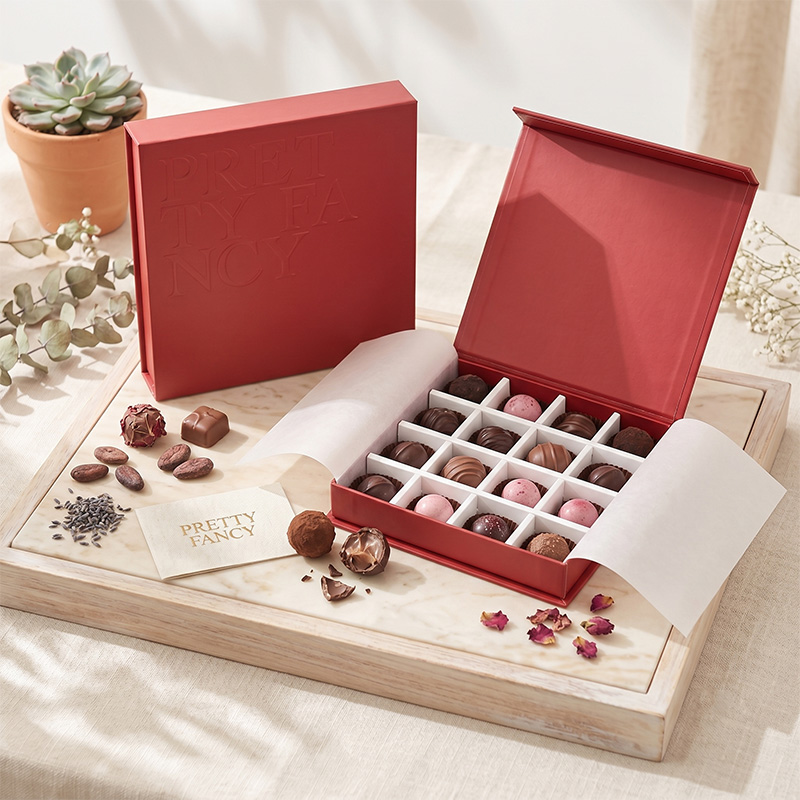
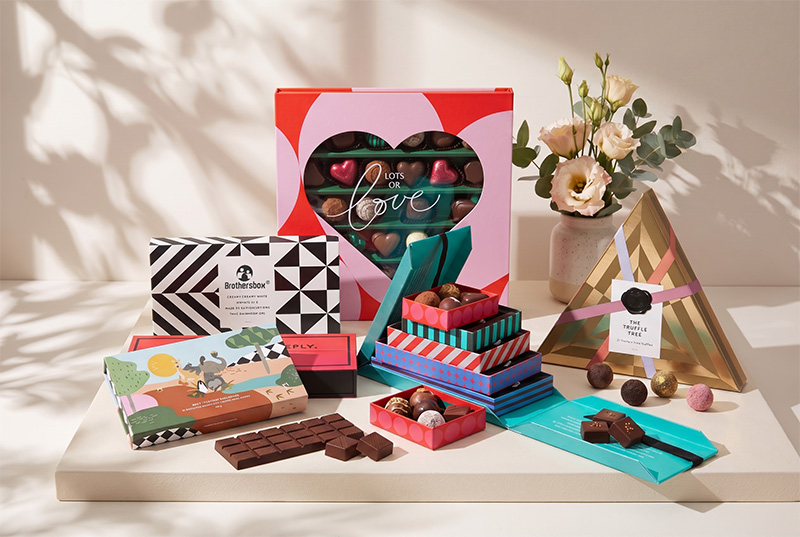
Best for: Premium food gift boxes, chocolate packaging, and event favors.
Why we love it: We use specialized matte, gloss, or soft-touch barriers that protect the product inside while making sure your exterior branding, foil stamping, and UV finishes pop brilliantly on the shelf.
Buying custom food packaging overseas shouldn't feel like a gamble. When you work directly with a manufacturer, you cut out the guesswork and the middlemen.
Brothersbox controls the entire process in-house—from die-cutting and structural design to printing and coating. We don't outsource the critical barrier application steps. This means every batch of packaging we ship comes with verifiable safety documentation tracing back to the raw materials.
We do more than simply run cardboard through a printer. We are box engineers. Our team understands how paper behaves, whether you require a reinforced corner for stacking or a particular ventilation design to keep fries crispy.
Are you prepared to create packaging that complements your menu and satisfies all regulatory requirements? Get in touch with Brothersbox's technical team and let's start working on your next project.